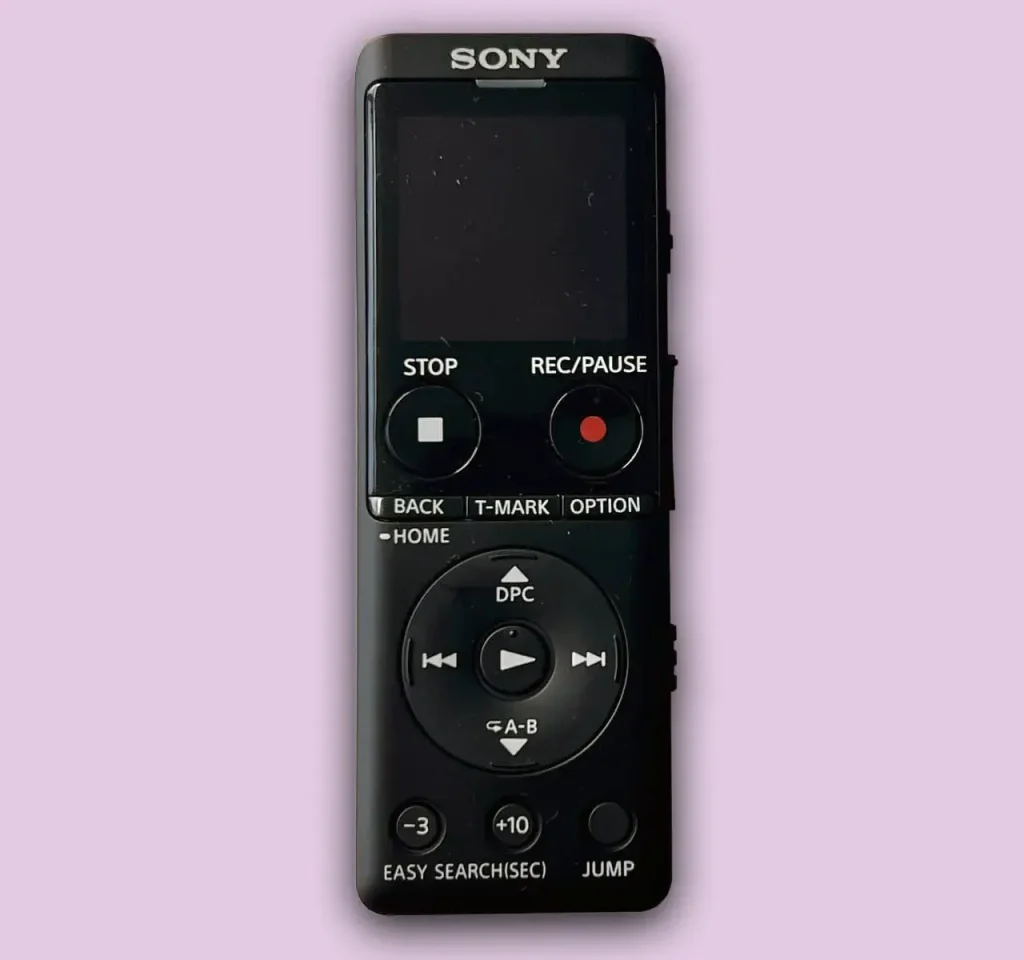
The Sony ICD-UX570 is one of those devices that quietly does its job well—especially if you know exactly what you need it for.
Overall Impression
This recorder mainly for voice memos with the intention of running them through AI transcription tools. For that specific workflow, it’s been excellent. The audio is clean, voices are easy to distinguish, and short recordings convert to text with impressive accuracy.
Where things became less consistent was during very long recordings. I tried capturing full 8-hour work sessions for meeting documentation, and the transcription quality dropped noticeably. The output often turned messy or incoherent. That suggests either subtle audio degradation over extended sessions or limitations in how the built-in microphones handle long-duration capture. For short to medium recordings, though, it’s solid.
Design and Build Quality
Physically, the ICD-UX570 is compact and lightweight—easy to slip into a pocket or bag without thinking about it. The interface is intuitive, with a bright, readable screen and simple navigation. It feels well-built despite its slim profile.
The built-in storage is fine for everyday memos, but if you plan to record longer sessions, a microSD card is practically mandatory. Without expanded storage, you’ll hit limits faster than expected.
Performance and Usability
For short voice notes, interviews, or meetings lasting a couple of hours, this recorder performs exceptionally well. Audio is crisp, and AI transcription tools handle the files cleanly. Having both MP3 and LPCM recording options adds flexibility depending on whether you prioritize file size or maximum quality.
The built-in speaker is surprisingly decent for quick playback checks. Battery life is reliable for general use, and charging is quick enough that it doesn’t become an inconvenience.
The main drawback shows up during extended recordings. After several hours, clarity seems to dip slightly. If you’re manually reviewing audio, this may not be a major issue. But if you rely on fully automated AI transcription workflows, expect to spend extra time cleaning up longer files.
Pros & Cons
Pros
- Excellent audio quality for short to medium recordings
- Compact and highly portable
- Expandable storage via microSD
- User-friendly interface
- Reliable battery life and fast charging
Cons
- Transcription accuracy drops on very long (8+ hour) recordings
- Limited onboard storage without expansion
- Microphone sensitivity isn’t ideal for large rooms or distant speakers
Who It’s Best For
Students, journalists, and professionals who need dependable voice capture for meetings, interviews, or memos will get real value from this device. It’s particularly effective when paired with AI transcription tools—provided recordings are kept to a few hours at most.
If you need to document day-long lectures or full work shifts, you can make it work with a high-capacity microSD card, but you should expect to manually review transcripts for accuracy.
Final Thoughts
The Sony ICD-UX570 is a strong everyday digital voice recorder. It excels at clear, concise recordings and works beautifully for short-form transcription tasks. It’s not a flawless solution for ultra-long sessions, but for most practical voice memo needs, it’s a worthwhile investment—just plan for extra storage and occasional transcript editing when dealing with lengthy files.

 By
By